A day of fishing with MP for Nelson Rachel Boyack
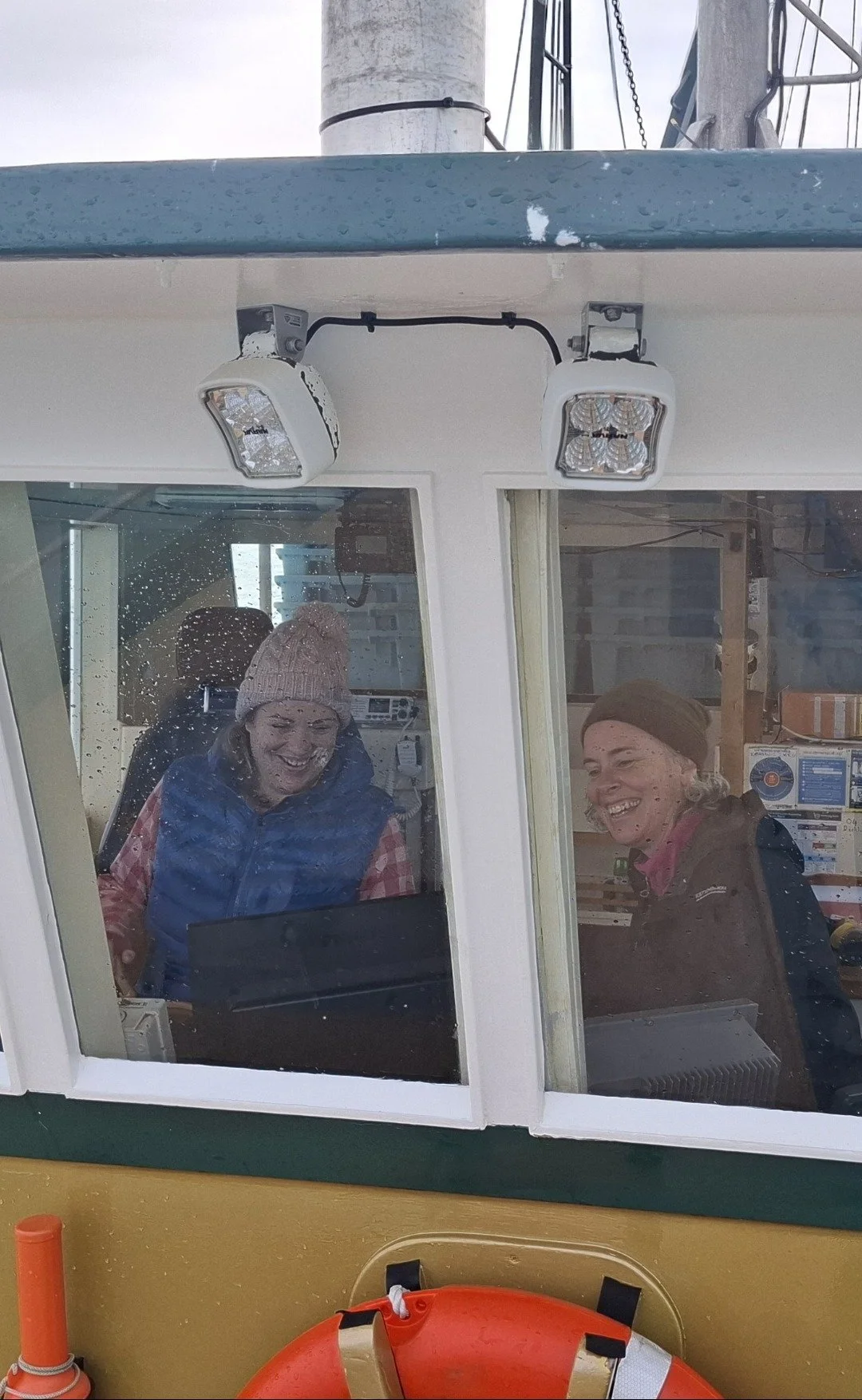
Skipper Alan Basalaj took MP for Nelson Rachel Boyack and her staffer Pania Walton out for a day of fishing on his vessel Kathleen G. He reports on how the day went, including the MP pitching in to help load the day’s catch on ice.
It was a forecast of wind, rain and more rain, at SE 30kn for Tasman Bay, over the next few days.
My two crew and I were waiting for our two guests to arrive. First was Pania – we saw her standing on the walkway in front of our berthed boat in the pouring rain. She climbed down the ladder and onto the bow of the FV Kathleen G. MP for Nelson Rachel Boyack turned up a little later.
Before we set sail, we had a chat about how the boat operates and the gear we use, where to safely stand and what to watch out for. We were here to go fishing!
Off out the harbour we went, through the Nelson cut and into the Tasman Bay. We only steamed out 30 minutes, then pulled the net back and set it away – heading towards Kaiteriteri. As we set the gear, I showed Rachel and Pania the ground rope of our 80-foot net, which is made up of small rubber discs covering a 14-metre wire, our 8-metre top and bottom bridles, which allows our net to open up to only 1-metre high, and our 100-metre rope-wire combination sweeps.
Next were the trawl doors and how they spread the gear to herd the fish in toward the net. Stopping there, I explained the gear we use is very light on the sea floor, not heavy, not digging into the bottom like a plough, nothing like what these anti-bottom trawling groups portray.
Once the trawl doors were away, we let out 200m of Dynice warp (a high-performance, lightweight synthetic rope made from Dyneema fibers). It is as strong as the strength of steel wire of the same diameter while weighing only a fraction as much. With this done, we plotted our course toward Kaiteriteri.
Inside we sat around our galley table for a chat. Rachel, Pania and I talked about certain fish stocks and how well they are going, along with some that are not so good. For example our area 7E tarahiki stocks are phenomenal, and snapper and rig are constantly increasing too. Barracuda and red cod have dropped off in recent years, and I wonder if warmer waters have contributed to these changes.
Rachel noted our frustration with the opposing groups and general public. She also mentioned she is in support of bottom trawling but not on seamounts, and would like to see it continue as it provides a great variety of fish and jobs, and is an important industry for those in Nelson.
Rachel asked if there was anything we would like to see changed or improved in our industry. I replied that I would simply like to hear her, if she was to be the next Minister for Oceans and Fisheries, voice her support for us.
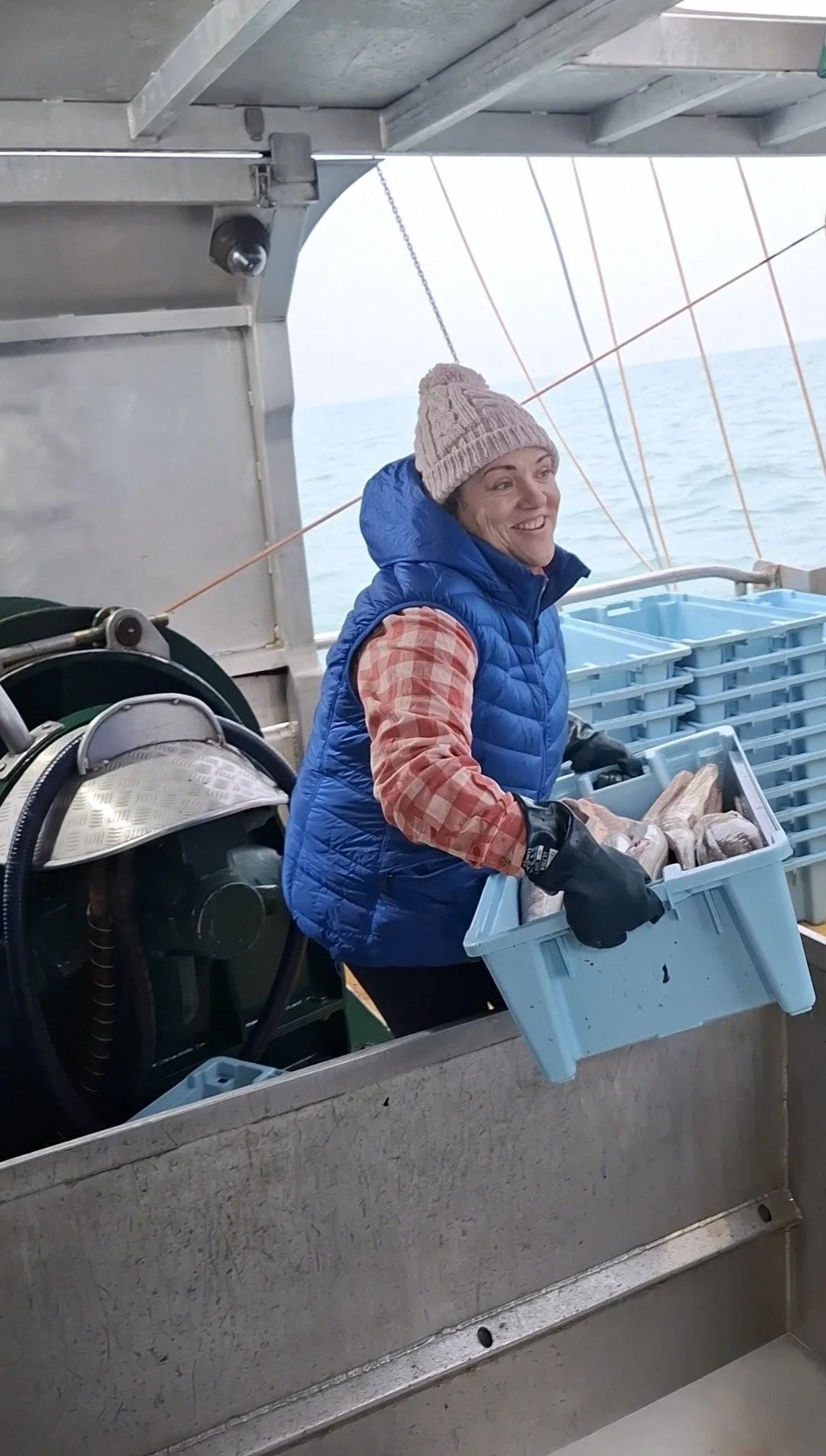
After two hours of towing we hauled in the gear to have a small lift of rig, with a few gurnard and flats amongst it. The crew delt to the fish, and then Rachel and Pania passed the cases down onto the ice in the freezer for the boys to put away.
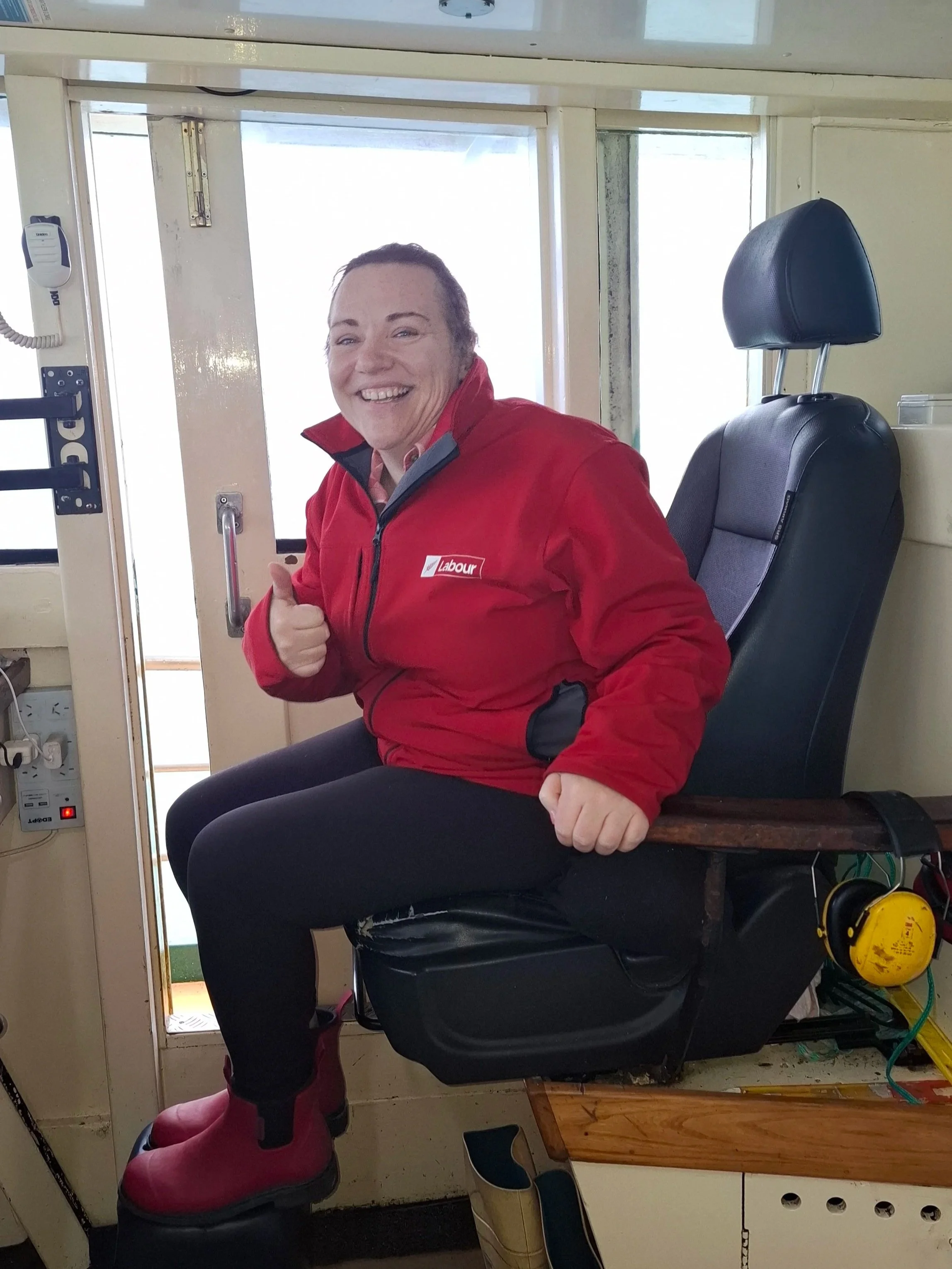
The weather was a bit better by the afternoon: the cloud had lifted and Nelson could be seen. I gave the helm to Rachel to steer the ship back to port, turned the auto pilot off and let her hand steer.
OMG…first we were heading towards Farewell Spit, then towards Rabbit Island, back towards D'Urville Island, back towards Rabbit Island. I could hear plenty of giggling going on from the both of them. The wobbles got less and less, and she got us inside Nelson’s cut.
With the boat back in the berth, Rachel and Pania thanked us for the day away from the office, saying they really enjoyed seeing what we do and how an operating trawler works. It was a pleasure to take them both and a great opportunity to share with them what we do well.
It was great that Rachel took the initiative and that she could clearly see an inshore bottom trawl operation for herself. She saw a sophisticated and meaningful way of catching the majority of fish we consume in New Zealand, rather than the grossly misguided proposition of destruction and environmental vandalism.
We were delighted to share our story with Rachel and Pania and will extend that invitation to anyone that wants to take the time.